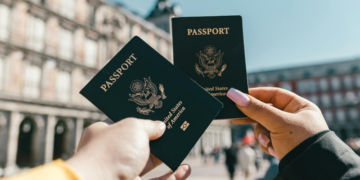
President Donald Trump on Tuesday signed a proclamation expanding U.S. travel restrictions, adding five countries to the previous list of 19 nations under full or partial restrictions, bringing the total to 39. The newly added countries are Burkina Faso, Mali, Niger, South Sudan, and Syria. Individuals traveling on Palestinian Authority–issued documents are also fully restricted from entering the United States.
The administration also imposed partial restrictions on 15 other countries: Angola, Antigua and Barbuda, Benin, Côte d’Ivoire, Dominica, Gabon, The Gambia, Malawi, Mauritania, Nigeria, Senegal, Tanzania, Tonga, Zambia, and Zimbabwe. These measures apply to both immigrant visas and several nonimmigrant categories, including business, tourist, student, and exchange visitor visas.
The White House explained that the affected countries face challenges such as unreliable civil documentation, high visa overstay rates, and limited cooperation in accepting deported nationals. The proclamation emphasized that the restrictions are necessary to prevent the entry of foreign nationals “about whom the United States lacks sufficient information to assess the risks they pose,” noting that the policy aims to strengthen national security, enforce immigration laws, and support U.S. foreign policy objectives.
At the same time, the order lifts the suspension on nonimmigrant visas for citizens of Turkmenistan, citing progress in identity management and information sharing, while maintaining restrictions on immigrant entry from that country. Exceptions remain in place for lawful permanent residents, existing visa holders, certain diplomatic and athletic visas, and individuals whose entry serves U.S. national interests.